July 28, 2025
4 mins

Rob Hyams
September 4, 2026
5 minutes
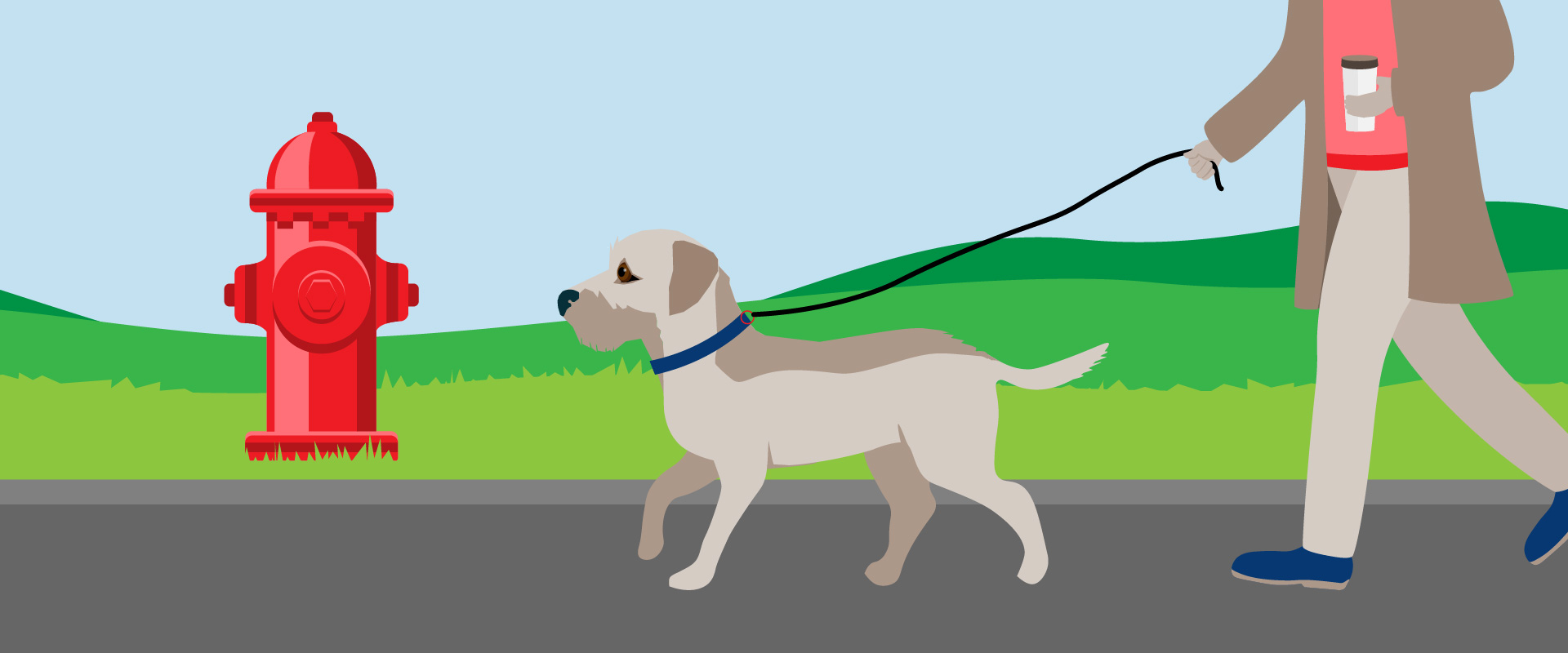
Living with a diabetic dog teaches you to notice things you never thought you'd pay attention to. The number of bathroom breaks. How much water disappears from the bowl. The frequency, colour and — yes — even the smell of their pee.
It might not make for glamorous dinner conversation, but these little observations can tell you a lot about how your dog is doing.
We've learned a lot about diabetic-dog pee since our Border Terrier Parker was diagnosed more than three years ago, including some changes we definitely weren't expecting. We wanted to share some of that and other insights (we thought about calling this article Urine - Our Thoughts but decided on a more traditional title).
One of the first things we noticed after Parker became diabetic was how often he needed to pee. The frequency of going outside to do his business went up by a notable degree.
Before diagnosis (or when diabetes isn't well controlled), excess glucose spills into the urine. Glucose draws water with it, causing increased urination (called ‘osmotic diuresis’). That's why many pet parents first notice their diabetic dog:
The last point was the trigger for us. In the days before Parker was diagnosed diabetic, we noticed he was suddenly drinking more water. He was in the latter stages of recovering from a successful knee surgery and was happy to eschew the cone of shame. He was drinking about a litre a day, which is excessive for a 10 kg (22 lb) dog.
I brought it up with a veterinarian covering for our regular vet who was on long-term leave. He didn’t really know Parker and suggested we remove the water. That didn’t sit well with us.
We contacted a different clinic; the one where Parker had his knee surgery. They ran bloodwork and called us that evening (on a Friday night nonetheless!) to let us know that Parker was diabetic.
That explained the excessive water consumption and was the start of a life-changing journey with a diabetic dog.
Diabetic dogs often drink more when their blood glucose is high. All that extra urination means they're losing more water, so it's important that they always have access to fresh water.
There's even a medical shorthand for it: polyuria (peeing more) and polydipsia (drinking more). You'll sometimes see vets refer to the combination as PU/PD.
When Parker’s mmol/L readings were high in the 20s (>360 mg/dL), and he didn’t appear to be drinking enough water, we learned about these tricks to encourage him to drink more:
Once a diabetic dog is well regulated, excessive drinking and urination should generally improve. If either suddenly increases again, it's worth paying attention.
In other words, your dog's bathroom habits can become another useful clue about how they're doing. If a dog who has been well regulated suddenly starts draining the water bowl and asking to go outside constantly again, don't simply write it off as a quirky few days. Mention the change to your veterinarian.
This is important: Never restrict your diabetic dog's access to water unless your veterinarian has specifically instructed you to do so.
If you're travelling with your diabetic dog, plan for more bathroom stops than you think you'll need. Changes in routine, increased drinking and long stretches in the car can all make your normal schedule less predictable.
Don't use reduced access to water as a way to reduce bathroom stops. For other travel tips, check out our articles on travelling with a diabetic dog.
After Parker became diabetic, we noticed Parker's favourite pee spot just outside our back door developed quite an odour.
We looked it up and learned that many diabetic dog owners notice a stronger smell. It’s not the sharp, acrid odour of cat pee. Thank goodness for that. It’s slightly sweet, and with a chemical smell like overripe fruit.
When blood glucose rises above a certain level, the kidneys begin allowing excess glucose to spill into the urine — something called glucosuria.
Parker's pee definitely developed a stronger, somewhat sweet smell after he became diabetic. Other pet parents report noticing changes too. But smell alone can't tell you what's going on inside your dog's body.
If your dog's urine suddenly develops a very strong or unusual odour, or if they're straining or uncomfortable when urinating, it's worth speaking with your veterinarian. Possible contributors include:
You can check for excess ketones with a simple test strip. Hold the test area in your dog's urine stream or collect a fresh urine sample and dip the strip, following the manufacturer's instructions. After the specified amount of time, compare the strip with the colour chart on the package.
If you detect ketones, follow your veterinarian's instructions or contact them for advice. Moderate or high ketone levels — particularly when accompanied by vomiting, loss of appetite, lethargy, weakness, dehydration or abnormal breathing — warrant urgent veterinary attention.
Glucose in urine creates favourable conditions for bacterial growth, and urinary tract infections are common in diabetic dogs. Importantly, they can sometimes be relatively “silent.”
Signs worth discussing with your veterinarian include:
Sometimes there may be few obvious signs, which is one reason urine testing can be an important part of veterinary monitoring for a diabetic dog.
Most of us don't inspect our dog's pee every time — nor do we particularly want to. But an occasional glance can be useful, particularly for a diabetic dog.
We’ve talked about the frequency of urination and smell. Just like with us humans, the colour of pee can be informative.
Very pale, dilute urine that is almost clear may accompany increased drinking and urination. On its own, it doesn't necessarily mean something is wrong, but a noticeable change from your dog's normal is worth monitoring.
Dark yellow urine may be more concentrated and can sometimes be associated with dehydration.
Pink/red urine could indicate blood and warrants veterinary attention.
Cloudiness in the urine can have multiple causes and deserves investigation if it's a new change.
Some foods, supplements and medications can also affect the colour of your dog’s urine and are best discussed with your vet if you notice something unusual.
You don't need to measure every pee or follow your dog around the yard with a clipboard. What helps is knowing what's normal for your dog. How often do they usually ask to go out? How much do they normally drink? Are they suddenly waking you at night? Having accidents? Taking much longer to pee?
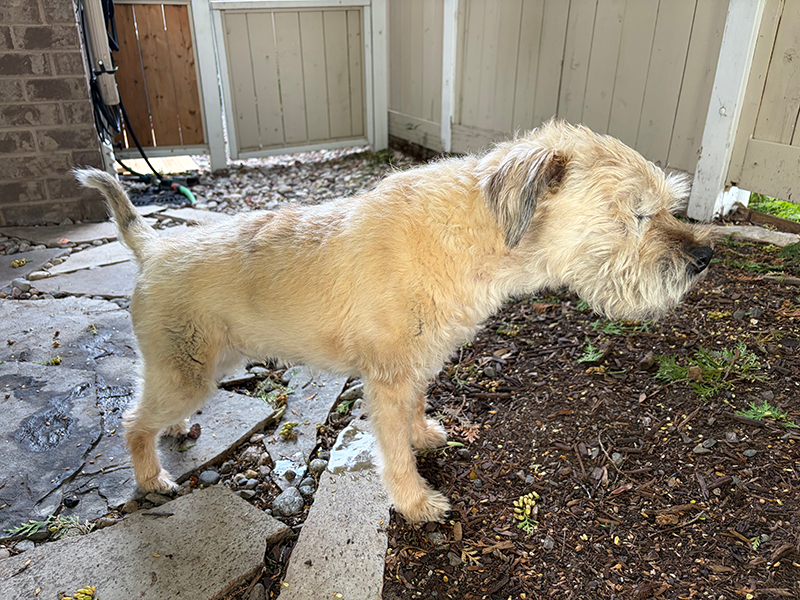
Parker has a favourite pee spot just outside the back door. In warmer months I dilute the urine with the garden hose, but during the coldest days of winter we let it be as we turn off our outdoor faucets for the season.
One winter, our power went out during a February cold snap here in Ottawa. Hydro Ottawa had to dig up our front yard to repair the underground cable. Because the ground was frozen solid, they used high-pressure water to excavate the area.
Unfortunately, they chose the exact spot where Parker has faithfully done his business for years.
As I watched them work, I felt compelled to apologize.
"I'm sorry about the smell," I said. "That's where our diabetic dog usually pees."
The worker looked up, smiled, and replied, "Yeah... I noticed."
Let's just say I was very glad they had a good sense of humour.
It's one of those things nobody tells you about living with a diabetic dog. You become surprisingly aware of where they pee, how often they pee, and yes... sometimes even how much it smells.
Your diabetic dog's pee isn't going to tell you their blood glucose number or diagnose a UTI or DKA. But changes in frequency, volume, appearance, smell and bathroom habits can tell you that something may have changed.
You don't need to obsess over every pee. You just need to know what's normal for your dog — and notice when it isn't.
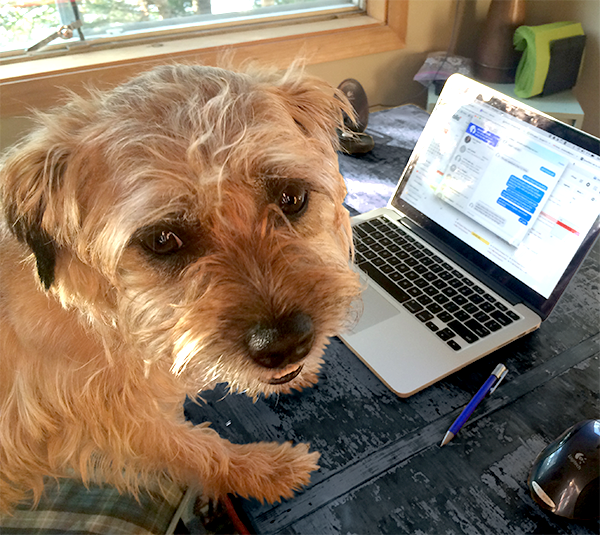
We’re a couple of pet owners who’ve learned firsthand what it takes to care for a diabetic dog. When our own dog, Parker, was diagnosed, we were overwhelmed, so we built this site to make things a little clearer for others starting out. Everything here is designed to help you understand, plan, and feel more confident managing your dog’s diabetes.