April 20, 2026
6 minutes

Rob Hyams
May 18, 2026
9 minutes
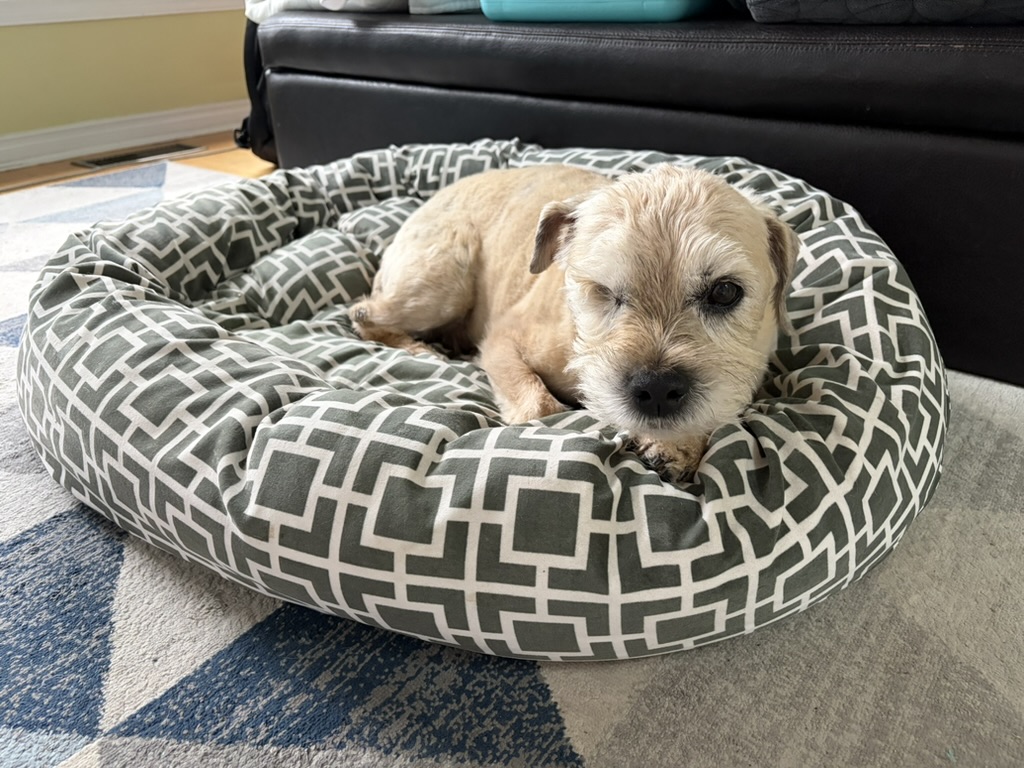
Travelling with a diabetic dog requires preparation. Travelling with a diabetic dog who also has vision problems adds another layer entirely.
Many diabetic dogs eventually develop cataracts or other eye conditions that affect their vision. Some lose sight gradually. Others lose it quickly. Some dogs adapt remarkably well at home — but travelling can suddenly make that confidence disappear.
We know this firsthand with Parker.
Parker has one eye and no lens in his remaining eye following cataract surgery complications. He’s also undergone an enucleation, the surgical removal of an eye. At home, he navigates surprisingly well because everything is familiar:
But on road trips, especially in unfamiliar motel rooms, things become much harder.
Last summer during a trip to the east coast, Parker struggled in our motel room. The floors, walls, baseboards, and furniture were all very similar in colour and texture. With limited depth perception and reduced vision, he had trouble understanding the space around him. Watching him bump into furniture and hesitate to move around was heartbreaking.
It made us realize something important:
A place that feels temporary to us can feel completely disorienting to a vision-impaired dog.
So this year, we’re trying something different.
A friend of ours who is an animal behaviourist suggested an idea we immediately loved:
create a small “travel space” at home before your trip — then recreate it as closely as possible while travelling.
The goal is simple:
We’re currently testing this approach with Parker before our next trip.
The setup doesn’t need to be elaborate. It can be:
The important part is consistency.
We’re using:
The hope is that when we recreate this setup in a motel room, it will immediately signal:
“This is your safe place.”
We’ll update this article after our next trip to share how it worked.
One thing we sometimes forget is that dogs experience the world very differently than we do.
When vision becomes limited, dogs rely even more heavily on:
That means small things can help tremendously while travelling:
Even placing your suitcase or shoes in predictable locations can help your dog build a mental map of the room.
When arriving somewhere new, we’ve learned not to rush Parker.
Instead of immediately unloading everything or letting him wander freely, we now try to:
For many blind or partially blind dogs, confusion can look like:
Giving them time to process the environment can make a huge difference.
Here are a few things we’ve found helpful — or plan to try:
A small plug-in night light can help dogs with partial vision navigate unfamiliar rooms after dark.
Once your dog learns the room layout, try not to move bags, shoes, or furniture around.
Use luggage or portable barriers to prevent access to stairs, balconies, or confusing spaces.
Clear walking routes between:
Simple phrases like:
Watching your dog struggle with vision loss can be emotionally difficult — especially when travelling.
At home, routines can hide how much they rely on familiarity. New places sometimes reveal just how hard they’re working to adapt.
But dogs are incredibly resilient.
What matters most isn’t creating a perfect trip. It’s helping them feel:
And honestly, that’s something dogs understand remarkably well.
Travelling with a diabetic dog who has cataracts, glaucoma, blindness, or has undergone enucleation may look different than it once did.
Trips might be slower. More structured. More carefully planned. But they can still be wonderful.
Sometimes the biggest adjustment isn’t lowering expectations. It’s simply learning to travel differently — together.
We’re a couple of pet owners who’ve learned firsthand what it takes to care for a diabetic dog. When our own dog, Parker, was diagnosed, we were overwhelmed, so we built this site to make things a little clearer for others starting out. Everything here is designed to help you understand, plan, and feel more confident managing your dog’s diabetes.