
September 8, 2025
5 minutes

Rob Hyams
April 15, 2026
8 minutes

Diabetes in our pets affects far more than their blood sugar levels. Over time, it can impact multiple systems in the body, including muscles — something we’ve seen firsthand with our dog Parker. It was heartbreaking to watch him suddenly struggle to do simple things like walk or stand.
For many pet owners, one of the more subtle but concerning signs of diabetes progression is muscle weakness or loss of muscle mass. We wanted to share what we’ve learned to help you recognize the signs early and support your pet’s health more effectively.
It helps to understand what’s causing these muscular changes.
Most pet parents with diabetic dogs know that diabetes is a disorder of how the body processes glucose. In healthy animals, insulin helps move glucose from the bloodstream into cells, where it is used for energy. In diabetic pets, either the body doesn’t produce enough insulin or can’t use it properly.
What we didn’t know is that when cells can’t access glucose, the body starts breaking down fat and muscle tissue for energy.
This leads to muscle wasting (atrophy) over time. And, as we saw with our diabetic Border Terrier Parker, energy levels drop, contributing to overall weakness.
Even if your pet is eating well, their body can behave as though it’s starving.
We noticed that muscle changes can be gradual. They can be easy to miss at first.
Here are some signs to watch for:
We live in a multi-level home with lots of stairs. After Parker’s eye surgery, he became tentative on the stairs, particularly when going down. We figured his slowness was due to his poor sight, but later realized he was also losing muscle mass.
High blood sugar over time can damage nerves, particularly in the limbs. This nerve damage (neuropathy) contributes to:
While less common, neuropathy can still occur in dogs and may contribute to mobility challenges alongside muscle loss.
We had a couple of incidents when Parker suddenly lost control of his back legs — what we later learned can be a form of diabetic neuropathy. When we brought him to the emergency vet, he was walking normally (of course!). They told us that the adrenalin rush of the drive and visit likely helped him overcome the issue. He was fine but we were wondering what was wrong with our little guy.
The encouraging news is that in many cases, yes — at least partially.
With proper diabetes management:
Key factors include:
Recovery may take weeks to months, and in more advanced cases, some weakness may persist.
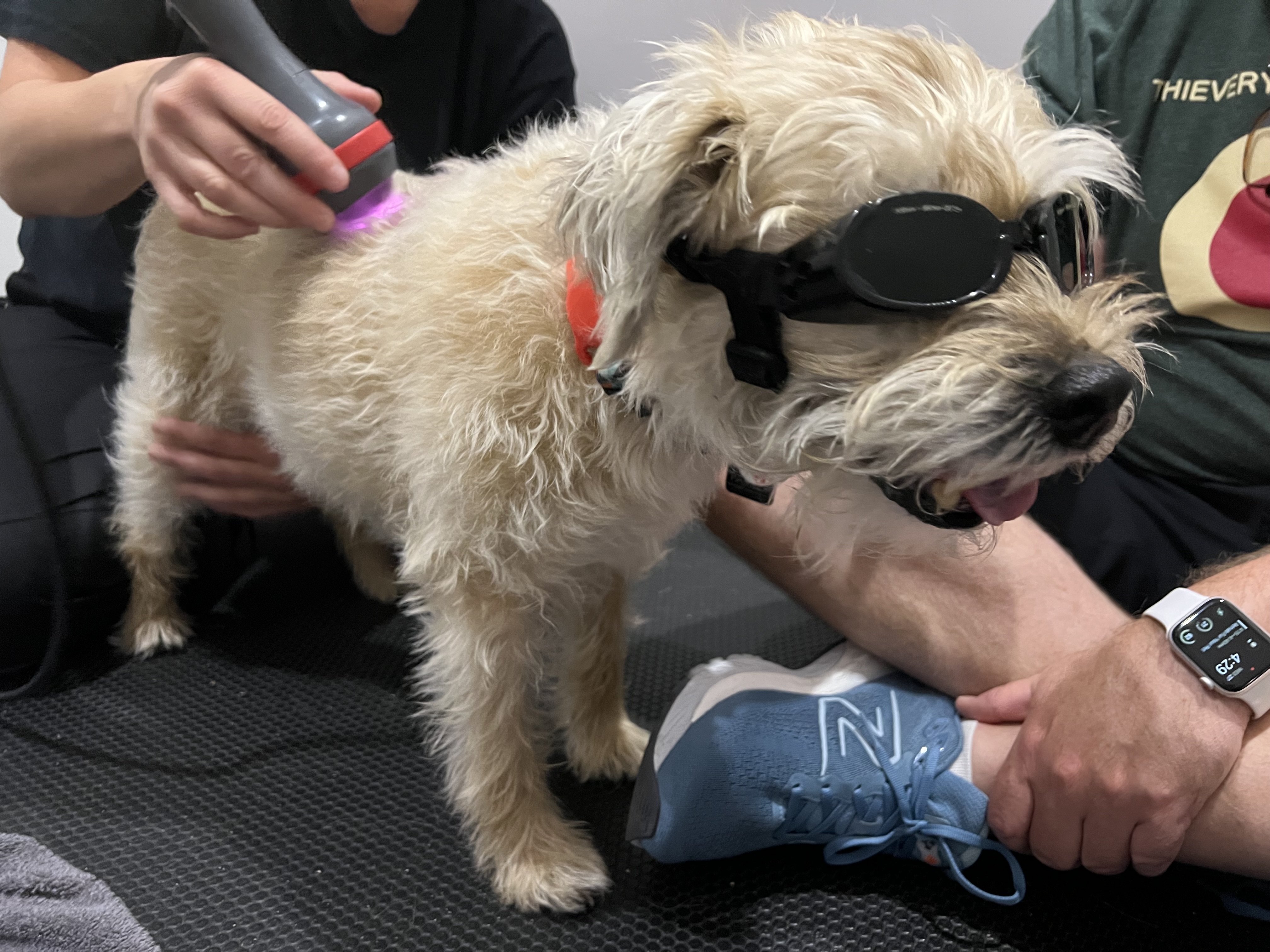
We introduced vitamin B12 drops into Parker’s diet and scheduled visits with a local pet rehab expert who used massage, laser therapy, and simple agility exercises to help him. After each visit, he’s more spry, confident, and playful.
Through our research and conversations with our vet and other experts, we’ve learned that there are several ways to help support your pet’s muscle health:
Stable blood sugar is the most important factor in preventing further muscle breakdown. Parker tends to run high blood glucose levels so this has been an ongoing challenge for us.
If you notice:
…it’s important to consult your veterinarian promptly. These could indicate poor glucose control or complications that need adjustment in treatment.
As we saw with Parker, muscle weakness in diabetic pets can be distressing to see, but it’s also a signal — one that often responds to better management and care. With the right support, many pets regain their strength, mobility, and quality of life.
Diabetes is a lifelong condition, but it doesn’t have to define your pet’s vitality. With attention, consistency, and a bit of patience, improvement is not only possible — as we learned, it’s common.

We’re a couple of pet owners who’ve learned firsthand what it takes to care for a diabetic dog. When our own dog, Parker, was diagnosed, we were overwhelmed, so we built this site to make things a little clearer for others starting out. Everything here is designed to help you understand, plan, and feel more confident managing your dog’s diabetes.